


When “Sure, I Can Do That” Becomes Automatic
You know when you are in a 1:1 with your manager, and he asks if you can take on one more thing?
That sounds like a reasonable question, doesn’t it?
“Do you have capacity to help with this?”
You don’t.
Your calendar is already full. There are three things you haven’t finished from yesterday. Someone is waiting for something you promised you’d send this morning, and you’ve already been trying to figure out how you’re going to get through everything that’s currently on your plate.
But that’s not what comes out of your mouth.
“Sure. I can do that.”
And almost as soon as the words leave your mouth, you regret them.
You knew you didn’t have the capacity before you said yes. You knew what was already waiting for you. And now, on top of everything else, there’s the frustration of knowing you just agreed to something you didn’t want to agree to.
Maybe you start mentally rearranging your day before the conversation is even over. I can work through lunch. I can move that other thing to tomorrow. Maybe I’ll stay online a little later.
And somewhere underneath all of that may be another thought: Why did I say yes again?
We may tell ourselves we need to get better at saying no or setting boundaries.
But what if the more important question is why “yes” came out before we ever gave ourselves the opportunity to decide?
Because sometimes people-pleasing isn’t about wanting someone to be happy with us. It’s about what we fear could happen if they aren’t.
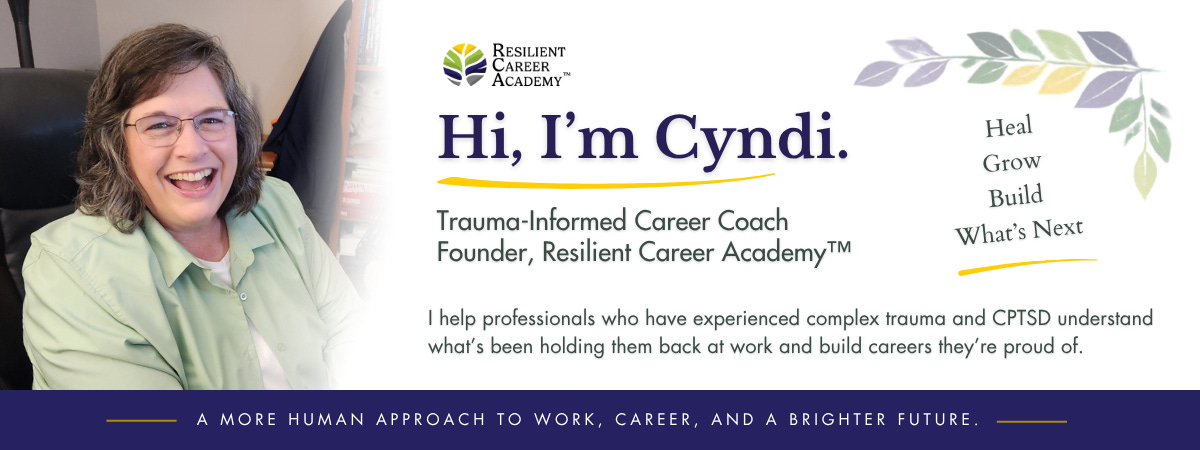
If we haven’t met, I’m Cyndi Bennett. I’m a trauma-informed career coach, founder of the Resilient Career Academy, and a trauma survivor myself.
I spent more than 25 years working inside corporate America, and much of the work I do now is focused on something I wish more of us talked about: the ways our past experiences can follow us into the workplace and quietly shape how we communicate, respond to authority, navigate conflict, make decisions, pursue opportunities, and build our careers.
People-pleasing is one of those patterns.
If you’re beginning to recognize some of these patterns in your own working life, I invite you to subscribe to The Resilient Career Academy. It’s free, and each week we explore how complex trauma and CPTSD can show up at work and what becomes possible when we begin building careers around who we are becoming, rather than the patterns that once helped us survive.
Because one of the things that makes people-pleasing so difficult to recognize at work is that it often doesn't look like a problem at all.
People-Pleasing Doesn’t Always Look Like People-Pleasing
One of the reasons people-pleasing can be so difficult to recognize at work is that it often looks like something else.
It can look like being dependable. Flexible. Helpful. Collaborative. Easygoing. The person who steps in when someone needs help, takes on the extra assignment, adjusts when plans change, and rarely makes things difficult for anyone else.
And workplaces often reward us for it.
We may become the person our manager knows they can count on. The coworker everyone comes to when they need something. The employee who gets praised for being a team player or for always being willing to go the extra mile.
None of those qualities are inherently a problem. In fact, being dependable, generous, collaborative, and willing to help others can be genuine strengths.
The question is whether we still feel like we have a choice.
Can we help when we want to help and say no when we don’t have the capacity?
Can we disagree without immediately worrying about how the other person feels about us?
Can we let someone be disappointed without rushing to make it better?
Can we ask for what we need even when it might inconvenience someone else?
Or do we find ourselves constantly monitoring the people around us, adjusting what we say, what we ask for, how much space we take up, and how much we’re willing to carry based on how we think they might respond?
That’s where being “easy to work with” can become something very different.
Because there is a difference between choosing to be accommodating and feeling as though we have to be accommodating.
And for some of us, that difference began long before we ever entered the workplace.
When Keeping the Peace Once Helped Keep Us Safe
For some of us, anticipating what other people needed didn’t begin as a workplace skill.
We learned to notice changes in someone’s mood. We noticed the shift in their voice, the expression on their face, the way they walked into a room. We learned when it was better to stay quiet, when to make ourselves useful, when to agree, and sometimes, how to become whatever the situation seemed to require.
Those skills may have served an important purpose.
When the people around us were unpredictable, easily angered, emotionally unavailable, or simply unable to make space for our needs, paying attention to what they needed could help us navigate what happened next. Keeping the peace wasn’t necessarily about being liked. Sometimes it was about creating as much safety as we could in circumstances we couldn’t control.
Then we grow up and go to work.
The environment has changed, but some of those responses can come with us.
A manager’s disappointment can feel like more than disappointment. A coworker’s frustration can create an immediate urge to fix something. Someone disagreeing with us can make us question whether we should have spoken up at all. And a simple request can produce an automatic “Sure, I can do that” before we’ve even considered whether we actually can.
Our nervous system isn’t necessarily responding only to what is happening in front of us. It may also be responding based on what it learned about conflict, disappointment, approval, and safety long before this particular conversation ever happened.
That doesn’t mean every time we help someone, avoid an argument, or say yes that we’re having a trauma response.
But it does give us another question to ask:
Am I choosing this response because it’s what I want to do, or does another response feel unsafe?
That distinction can help us begin to understand why something as seemingly simple as saying “no” can sometimes feel anything but simple.
The Question Isn’t “Why Can’t I Just Say No?”
Once we recognize people-pleasing as a pattern, it’s tempting to focus on the behavior we want to change.
I need to get better at saying no.
I need stronger boundaries.
I need to stop worrying so much about what other people think.
Those things may be true, but they don’t necessarily address what is happening in the moment when we want to say no and “Sure, I can do that” comes out instead.
Because if saying no feels risky, knowing that we should set a boundary doesn’t make the risk disappear.
Maybe we worry our manager will think we’re not committed. Maybe we fear a coworker will be angry with us. Maybe we imagine being excluded from the next opportunity because we weren’t willing to help this time. Or maybe we can’t even identify what we’re afraid will happen. We just know that disappointing someone feels deeply uncomfortable.
So perhaps there is a more useful question:
What do I believe could happen if I disappoint this person?
That question creates space between the request and our automatic response.
It gives us an opportunity to notice what we may be protecting ourselves from. Is it conflict? Rejection? Criticism? Being seen as difficult? Losing someone’s approval? Being perceived as incapable or unhelpful?
And then we can begin asking another question:
Is that what is actually happening here, or is my response being shaped by what I’ve learned to expect?
We don’t have to force ourselves to say no before we’re ready. We can start by becoming curious about why saying yes feels so necessary.
Because sometimes the first boundary isn’t the “no.”
It’s giving ourselves enough time to decide what our answer actually is.
The Career Cost We May Not See
People-pleasing can help us become the person everyone wants on their team. But being valued for how much we’re willing to accommodate can come with a cost.
Sometimes that cost is easy to see. We take on too much, work longer hours, struggle to protect our time, and eventually find ourselves exhausted or resentful about responsibilities we agreed to take on.
But some of the career costs are quieter.
When we’re focused on making sure everyone else is okay with us, we may hesitate to negotiate for more money because we don’t want to appear demanding. We may stay silent in meetings even when we have something valuable to contribute. We may accept decisions we disagree with, avoid difficult conversations, or soften our ideas so much that no one really knows what we think.
We may also become very good at doing work that makes other people’s lives easier while spending less time on the work that could move our own careers forward.
That’s where people-pleasing can become really complicated. The very behaviors that earn us praise in the short term can sometimes keep us from advocating for ourselves in the long term.
We can become known as dependable without becoming known for our expertise. Helpful without becoming visible. Easy to work with without ever allowing the people around us to see what we want, what we think, what we’re capable of, or where we want to go next.
And perhaps the greatest cost is that other people can begin making career decisions based on a version of us we’ve worked very hard to make comfortable for them.
They can’t consider the boundary we never expressed. They can’t respond to the opinion we didn’t share. They can’t know about the opportunity we wanted but never asked for.
People-pleasing doesn’t mean we aren’t ambitious or capable. But if much of our energy is spent managing other people’s reactions, there may be less room for us to ask an equally important question:
What do I want from my career?
What If the Goal Isn’t to Stop Caring What People Think?
When we begin recognizing people-pleasing as a pattern, it’s easy to swing toward the opposite conclusion.
I need to stop caring what people think.
But I’m not sure that’s the goal.
Caring about the people we work with isn’t a weakness. Neither is being thoughtful, collaborative, generous, or willing to help. In fact, some of the qualities underneath our people-pleasing may be qualities we genuinely value about ourselves.
The problem isn’t that we care.
The problem is when caring about someone else’s response leaves us unable to consider our own.
There is a difference between helping a coworker because we want to and helping because we’re afraid of what they might think if we don’t. There is a difference between considering our manager’s perspective and automatically making their needs more important than our own. There is a difference between choosing compromise and believing we’re not allowed to disagree.
That’s why I don’t think recovering from people-pleasing at work requires us to become someone entirely different.
Maybe it means learning that we can be kind and have boundaries. We can be collaborative and disagree. We can care about someone’s disappointment without taking responsibility for making it disappear. We can be generous with our time and still decide when we don’t have any more to give.
The goal isn’t to stop caring about other people.
The goal is to have a choice about what we do with that care.
And that choice may begin in a very small moment. The next time someone asks us for something, perhaps we don’t need to immediately practice saying no.
Maybe we simply practice not saying yes quite so quickly.
We give ourselves permission to pause. To notice the urge to make the other person happy. To pay attention to what we’re afraid might happen if we don’t. And, eventually, to discover that we can make a different choice.
That doesn’t mean the old response disappears overnight. These patterns were learned for a reason, and recognizing them doesn’t automatically make them easy to change.
But it does give us somewhere to begin.
Recognizing the Pattern Is the First Step
People-pleasing at work can be difficult to recognize because so much of it can look like the qualities we value in ourselves. We may be dependable, thoughtful, collaborative, generous, and genuinely care about the people we work with.
But throughout this article, we’ve been looking at what happens when those qualities stop feeling entirely like choices.
When “Sure, I can do that” comes out before we’ve considered whether we actually can. When someone else’s disappointment feels like something we need to prevent. When keeping the peace becomes more important than expressing what we think. When being the person everyone can count on begins to affect our workload, our boundaries, our visibility, or the decisions we make about our careers.
None of this means we need to become less caring, less generous, or less collaborative.
It means we can begin noticing when an old pattern may be making a decision for us.
And that matters because we can’t change a pattern we haven’t learned to recognize.
But recognizing the pattern is only the first step.
Once we can see what’s happening, the next question becomes: What do I do when it happens again?
What do I do when my manager asks me to take on one more thing and I can already feel “Sure, I can do that” forming in my mouth? What do I do when someone is disappointed with me and every part of me wants to make it better? What do I do when I know what I need, but asking for it still feels uncomfortable?
That’s where we begin moving from recognizing our patterns to building and practicing new responses.
It’s also the work we do together inside the Resilient Career Academy Group Coaching Program.
The 5 R Framework for Resilient Career Advancement helps us Recognize the Pattern, Root Out the Cause, Rebuild the Response, Rehearse It Live, and Reinforce for Good. We don’t just talk about why these patterns exist. We work on what becomes possible when they show up in the real situations we’re navigating at work.
The goal isn’t to become someone who never cares what other people think.
It’s not to stop being helpful, thoughtful, dependable, or generous.
It’s to have a choice.
So the next time someone asks something of us, maybe there is a little more space between the question and our answer.
Enough space to consider our capacity.
Enough space to consider what we need.
Enough space to decide what we actually want to say.
And maybe, this time, “Sure, I can do that” isn’t automatic.
If you’re beginning to recognize the patterns that may be shaping your career and you’re ready for support changing what happens next, I invite you to explore the Resilient Career Academy Group Coaching Program.