


Have you ever sat in your car after a grueling twelve-hour shift as an emergency room nurse and just couldn’t move?
The fatigue hits hard once you leave those doors and finally sit down without someone needing you.
The day was chaotic. Perhaps it was a full moon.
Critical patients were everywhere. You barely had a chance to go to the bathroom. Lunch was a quick pass through the break room to inhale the food you brought.
And a young child, the same age as your son, did not survive a car accident. You kept working afterward, carrying that heaviness through the rest of your shift.
Now you’re looking at your phone. There’s a reminder for the in-service training you signed up to attend but never reached.
You missed it again.
You had wanted to be there. It was an opportunity to learn, build your skills, and take another step toward the career you wanted.
But sitting in your car, you feel relieved that you don’t have to take on one more thing.
Then comes the question:
How are you supposed to grow in your nursing career when getting through a shift takes everything you have?
When Getting Through the Shift Takes Everything
You signed up for that training because you wanted to be there. Maybe it would help you earn a certification, prepare for another role, or explore a specialty that interests you.
Now you have missed it again.
Other people manage to do this. Why can’t I?
You think about the colleague who stayed late for a class last week. You tell yourself you should have planned better, pushed through, found a way.
During the shift, pushing through was what you did.
When someone needed help, you stepped in, even though you were already behind. When you needed help yourself, you hesitated.
Everyone’s busy. I should be able to handle this.
You noticed the change in your supervisor’s tone and wondered whether you had done something wrong. You checked your patient notes again. You wanted to be certain there was nothing anyone could question.
After the child died, someone asked if you were okay.
“I’m fine.”
There were patients waiting. And you weren’t sure what would happen if you let yourself stop.
Perhaps some of this feels familiar beyond nursing: watching other people closely, trying to anticipate what they need, feeling uneasy about disappointing them. Being useful may have become a way to feel secure long before it became part of your job.
Now those habits can be difficult to separate from being a good nurse.
You may volunteer for another shift while postponing the course that matters to you. You may want a transfer but worry that your manager will think you cannot cope. You may hear about an opening and immediately think of every qualification you lack.
I need more experience first.
They probably have someone better in mind.
I can’t leave the team when we’re already short.
Meanwhile, your own plans keep moving further down the list.
The staffing shortages, missed breaks, and distressing events are real demands. When your response is to ask even more of yourself, it becomes harder to see what support is missing or what choices might be available.
Career development begins to involve questions you may not have expected:
What happens to my goals when I keep putting everyone else’s needs ahead of them? And what would help me give those goals some room?
Before We Go Further, Let Me Introduce Myself
I’m Cyndi Bennett, a trauma-informed career coach and Founder of the Resilient Career Academy.
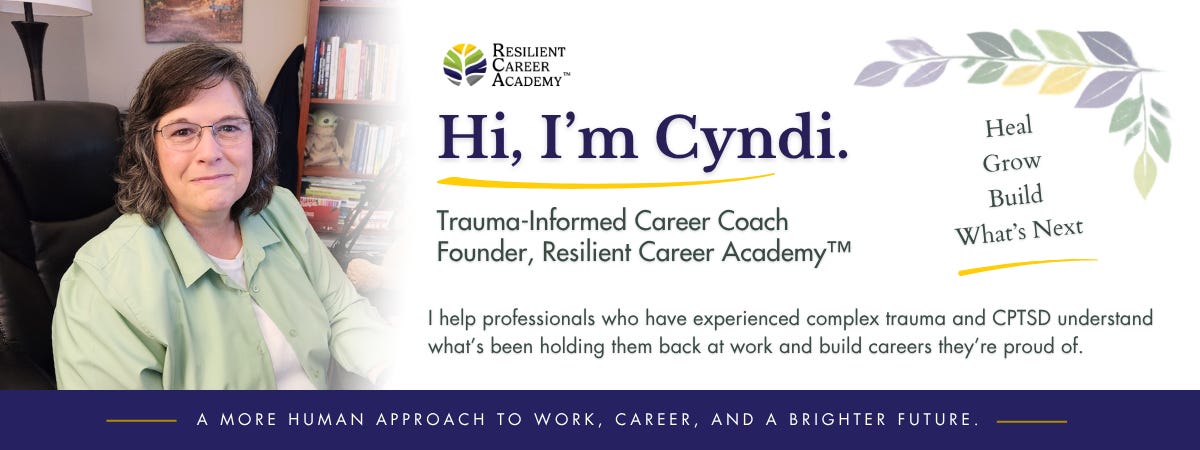
I help professionals who have experienced complex trauma and CPTSD understand how their experiences may be shaping their working lives and career decisions.
For nurses, that can mean recognizing the pressure to keep pushing through, making room for their own professional goals, and exploring career options that fit their strengths, needs, and aspirations.
Today, we’re exploring how childhood caretaking patterns can become part of your work identity, how the armor that helps you get through a shift can make your needs difficult to acknowledge, and what it might mean to include yourself in the care you give.
When Caring for Others Became a Way to Be Safe
Perhaps you were taking care of people long before you became a nurse.
As a child, you may have learned to notice what someone needed before they asked. You watched expressions, listened for changes in tone, and tried to keep people comfortable. Being helpful might have brought approval, reduced conflict, or made the day feel more predictable.
Your own needs could wait. Sometimes, expressing them made things harder.
Over time, caring for others became something you did almost automatically. You simply knew how to be the responsible one, the helpful one, the person who could manage.
Then you entered a profession where caring for others is central to the work.
Your compassion, knowledge, and clinical skills matter. Alongside them, there may be an old expectation that you must keep giving, whatever it costs you.
They need me. I can wait.
You postpone the bathroom break. You offer to help before checking whether you have anything left to give. You feel uncomfortable resting while someone else is struggling.
Sometimes there genuinely is no coverage or opportunity to step away. At other times, help may be available, yet accepting it still feels uncomfortable. Both deserve attention.
If being needed once helped you feel safe, someone else’s unmet need may feel like something you must personally resolve.
That can make it difficult to recognize where your responsibility ends, especially in a workplace where there is always more to do.
When Being Capable Becomes Your Armor
At work, you may be the nurse people turn to when things get difficult.
You stay composed. You keep moving. You know how to put your feelings aside until later.
Perhaps you have been doing that for years.
The armor can be hard to recognize because it looks like competence. People see someone dependable. They may not see the effort involved, or how difficult it feels to say, “I need help.”
You might hear yourself agreeing to another request before you have considered whether you can manage it.
If I say no, will they think I don’t care?
You might want to tell your manager that you are struggling, then decide against it.
What if they stop trusting me?
Being the person who handles things may have become so closely tied to your identity that having limits feels unsettling.
If I’m not the person who always steps in, who am I?
That question can follow you into professional growth. Learning something new involves asking questions, needing guidance, and allowing others to see what you do not yet know. Pursuing an opportunity may mean disappointing someone who wants you to stay exactly where you are.
When being capable and available has helped you feel secure, those steps can carry more emotional weight than anyone else realizes.
What You Carry Beyond the Shift
You get home, but your thoughts are still at the hospital.
You remember the child’s face. You think about your own son. Someone asks about your day, and you pause before answering.
“Busy.”
You may worry about upsetting the people you love, or simply feel too tired to find the words.
Later, you open the information about that training. You read the same paragraph twice.
I’ll look at it on my day off.
But your day off already has a job: helping you recover enough to return.
Repeated exposure to other people’s traumatic experiences can contribute to secondary traumatic stress. Recognizing that exposure is part of supporting professionals whose work brings them into contact with others’ trauma. National Child Traumatic Stress Network
Alongside your own history, there may now be experiences from work that need attention too. Some may touch something familiar. Others may be painful because of what you witnessed that day.
Yet the habit of putting others first can continue at home.
My family needs me. They’ve had a long day too.
You may care for everyone around you while struggling to find somewhere you can speak honestly about what you are carrying.
Having that space could matter to your professional future as much as finding another training opportunity. It may help you understand what is exhausting you, what still matters to you, and what support you would like to explore.
Making Room for Yourself in Your Career
Recognizing these patterns can bring mixed feelings.
You may value your generosity and dependability. You may also begin to notice how often your own development waits until everyone else has what they need.
There is no requirement to change everything at once.
If it feels helpful, you might notice one moment when you automatically put yourself last. Perhaps you dismiss a course you want to attend, agree to extra work, or decide against asking a question.
What went through your mind just before that decision?
Was there a practical barrier? Concern about how someone would respond? A familiar feeling that wanting something for yourself was asking too much?
Your answer may offer a place to begin.
The workplace matters here too. Staffing shortages, distressing events, compliance demands, and fear of being blamed or sued are pressures that deserve to be taken seriously. Understanding your own patterns does not make you responsible for resolving those conditions.
It can, however, help you notice when you are carrying an additional expectation: that you must meet everyone’s needs without having any of your own.
Your interests, learning, and hopes for the future belong in the conversation.
If your needs had a place alongside everyone else’s, what might you want to explore in your nursing career?
As you sit with that question, you may begin to notice how these patterns have shaped earlier career decisions too: an opportunity you passed over, support you hesitated to ask for, or a goal that kept coming last.
If you’d like to explore those connections further, you’re welcome to read more at Resilient Career Academy, where I write about how trauma patterns can influence the direction of your career and what it can mean to make room for your own needs and aspirations.
Let’s Continue the Conversation
This Sunday, I’ll be joining Patrick LaRose, host of The Second Shift podcast, for a live conversation about how trauma patterns can influence how you show up in the work environment.
We’ll bring our perspectives to a conversation that makes room for the person behind the professional role.
If these experiences feel familiar, or you’re curious about the patterns you notice in yourself at work, you’re welcome to join us. You can listen without needing to share your story.
As I was reading this I was thinking, was Cyndi working next to me when I was floated to the ED because that is exactly how it feels!!! I am so excited to be going live with you on Sunday and I know our conversation is going to have great meaning to a lot pf people. See you Sunday!