

Start noticing what happens when you’re triggered at work
Sometimes we know immediately what triggered us.
Other times, we just know that something happened and suddenly we’re anxious, defensive, overwhelmed, shutting down, overthinking, people-pleasing, or trying desperately to fix whatever just happened.
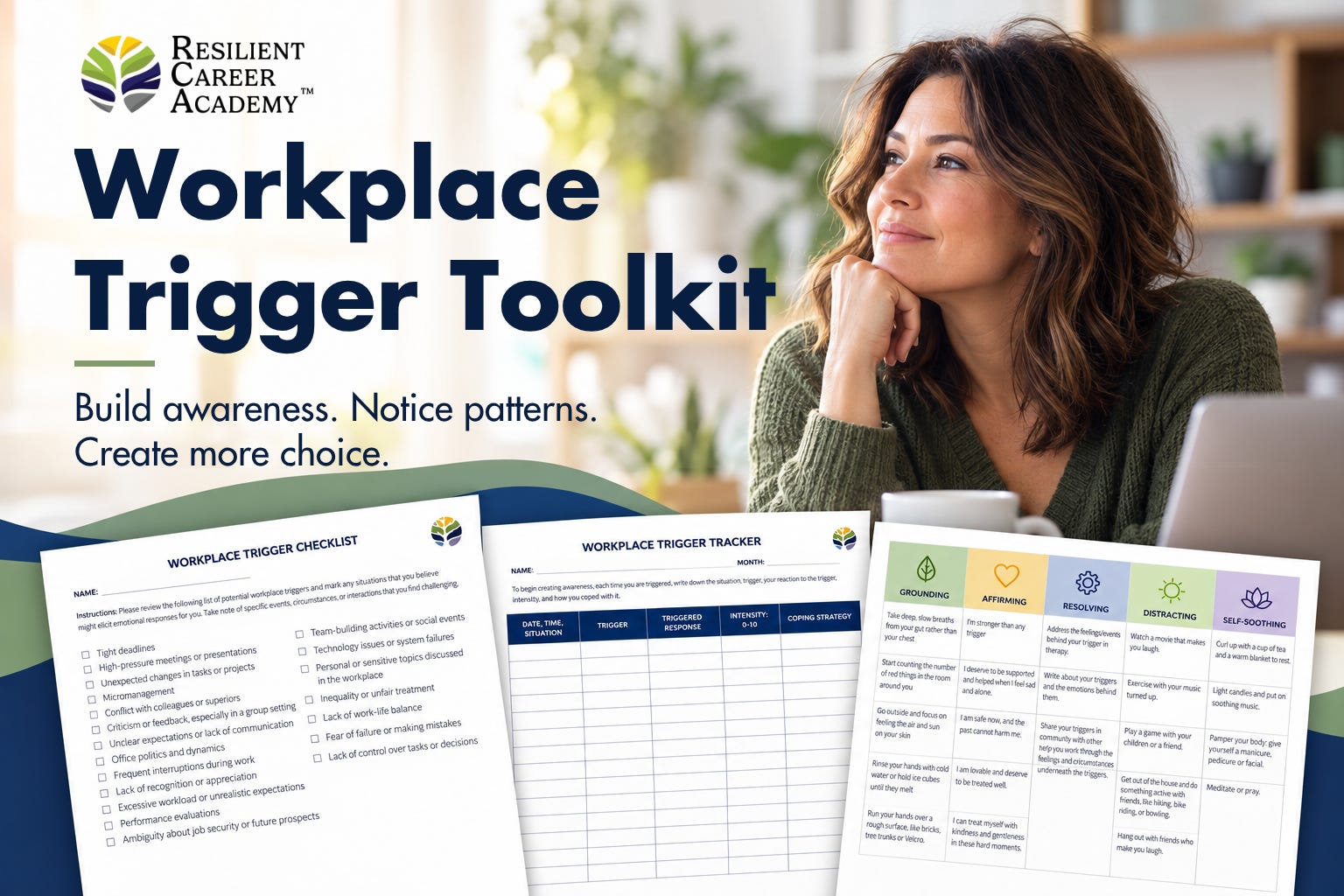
The Workplace Trigger Toolkit is designed to help you slow those moments down and begin noticing the patterns underneath them.
This isn’t about judging your response or figuring out what’s “wrong” with you. It’s about building awareness of what tends to activate you at work, how you respond when it happens, and what helps you navigate the experience.
What’s Inside
The toolkit includes:
Workplace Trigger Checklist
Identify workplace situations that may tend to activate a stronger emotional response, including feedback, conflict, micromanagement, uncertainty, workload, performance evaluations, and fear of making mistakes.
Workplace Trigger Tracker
Capture what happened, what triggered you, how you responded, the intensity of the response, and what you did to cope.
Completed Trigger Tracker Example
See what the tracking process can look like using examples of common workplace experiences.
Coping Strategy List
Explore grounding, affirming, resolving, distracting, and self-soothing strategies you may already use or want to experiment with.
Personal Coping Strategy Template
Create your own list based on the strategies that work best for you.
How to Use the Toolkit
You don’t need to track every time you feel uncomfortable at work.
Start by looking through the Workplace Trigger Checklist and noticing what stands out.
Then, when you have a workplace experience where your response feels especially strong, surprising, familiar, or difficult to shake, use the Trigger Tracker to capture what happened.
Over time, you may begin to notice patterns.
Maybe certain types of feedback consistently activate you. Maybe uncertainty sends you into overworking. Maybe conflict makes it difficult to access your words. Maybe you discover that some coping strategies help you recover more quickly than others.
We’re gathering information, not evidence against ourselves.
Because the more we can recognize our patterns, the more opportunities we may have to create choice in what happens next.