
Most managers want to lead well. Very few have ever been taught how trauma actually shows up at work, and even fewer know what to do when they see it.
That gap has real consequences. When a team member goes quiet, pushes back hard, misses deadlines, or says yes to everything even when they are drowning, most managers default to a performance conversation. But what if the behavior is not a performance issue at all? What if it is a trauma response? Knowing the difference changes everything about how you lead.
That is exactly what this guide helps you do.
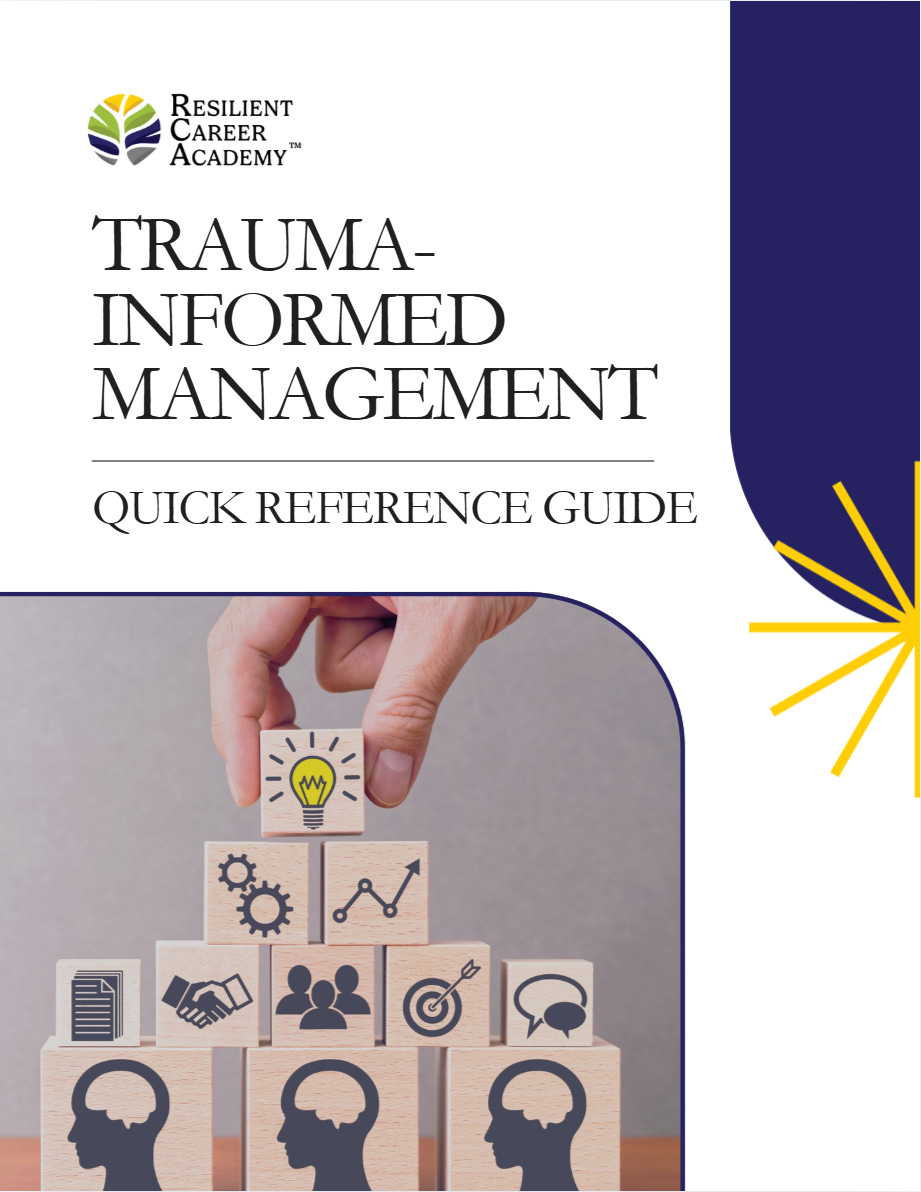
The Trauma-Informed Management Quick Reference Guide walks you through the six core principles of trauma-informed leadership and explains how trauma responses like fight, flight, freeze, and fawn actually manifest in everyday workplace behavior. From there it gives you a full communication framework covering what to do before, during, and after difficult conversations, along with real word-for-word scripts you can use in the moment for situations like addressing performance issues, responding to someone who seems overwhelmed, or recovering after you have made a mistake as a leader.
It also covers how to build genuine psychological safety on your team, how to recognize and respond to common workplace triggers, and how to apply trauma-informed practices inside meetings, performance reviews, and organizational change. The guide closes with a self-assessment so you can honestly identify where you are strong and where you have room to grow, plus a reminder that modeling self-care is part of the job too.
This guide is available to members of the Resilient Career Academy.
If you are ready to move from understanding what you are feeling to knowing what to do about it, the rest of this article is waiting for you inside The Resilient Career Academy. I would love to have you there.
